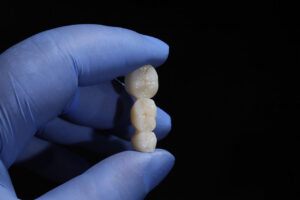
A missing tooth can feel like one small gap, but the mouth rarely treats it that way. Teeth work as a team. When one tooth is gone, nearby teeth may shift, chewing pressure can change, and certain foods may become harder to enjoy. A dental bridge is a time-tested way to close that space and bring balance back to your smile. For many patients, dental bridges offer a stable, natural-looking solution without the need for a removable appliance.
At Carolina Roots Dental in Garner, NC, dental bridges may be recommended as part of a restorative dentistry plan when one or more teeth are missing. The goal is to restore appearance, support chewing, and help protect the teeth around the gap from unwanted movement.
What Are Dental Bridges?
Dental bridges are fixed restorations that replace missing teeth. A traditional bridge uses the teeth on either side of the gap as support. These supporting teeth are covered with crowns, and the replacement tooth, often called a pontic, fills the open space between them.
Dental bridges can be made from materials designed to look like natural teeth. The final restoration is shaped and shaded to blend with your smile. Once cemented in place, a dental bridge stays in your mouth and does not come out like a removable partial denture.
Dental bridges are often used when:
- One tooth is missing between two stable teeth
- Several teeth in a row are missing
- A patient wants a fixed replacement
- The nearby teeth already need crowns
- An implant is not the preferred option
Every case is different. Your dentist will look at the health of the supporting teeth, the gum tissue, the bite, and the location of the missing tooth before recommending a bridge.
Why Replacing Missing Teeth Matters
Some people delay tooth replacement because the gap is not visible when they smile. But even a back tooth gap can create problems over time. Teeth naturally want to move when there is open space. The teeth beside the gap may tilt inward, and the opposing tooth may drift up or down because it no longer has a biting partner.
This can lead to:
- Uneven chewing pressure
- Food trapping around the gap
- Difficulty cleaning tilted teeth
- Higher risk of cavities and gum irritation
- Bite changes that affect jaw comfort
- Extra wear on remaining teeth
Dental bridges help prevent these problems by filling the space and restoring a more complete bite. When chewing pressure is shared more evenly, patients often feel more comfortable eating and speaking.
Types of Dental Bridges
There are different types of dental bridges, and the best option depends on your mouth and treatment goals.
Traditional Dental Bridges
A traditional bridge is the most common type. It uses crowns on the teeth next to the gap to hold the replacement tooth in place. This can be a strong choice when the supporting teeth are healthy enough to carry the bridge or already need crowns.
Implant-Supported Bridges
An implant-supported bridge uses dental implants instead of natural teeth for support. This can be helpful when several teeth are missing or when the goal is to avoid placing crowns on nearby natural teeth. Implant-supported bridges require enough bone and healthy gums for implant placement.
Cantilever Bridges
A cantilever bridge is supported on only one side. This type is used less often because it places more force on the supporting tooth. It may be considered in specific cases where the bite and tooth location make it appropriate.
Carolina Roots Dental can help determine which bridge design is safest and most stable for your situation.
The Dental Bridge Process
The process for dental bridges usually takes more than one visit. Each step is designed to create a restoration that fits well, looks natural, and supports comfortable chewing.
Step 1: Evaluation and Planning
Your dentist examines the missing tooth area, nearby teeth, gums, and bite. X-rays or scans may be taken to check the roots and bone support. This step helps determine whether a bridge is the best choice or whether an implant, partial denture, or another option should be considered.
Step 2: Preparing the Supporting Teeth
For a traditional bridge, the teeth on either side of the gap are reshaped for crowns. These crowns will support the replacement tooth. The area is numbed for comfort during this step.
Step 3: Impressions or Digital Scans
A scan or impression is taken so the bridge can be custom-made. The bridge must fit the supporting teeth precisely and align with the opposing teeth when you bite.
Step 4: Temporary Bridge
A temporary bridge may be placed while the final restoration is being made. This protects the prepared teeth and helps you chew and smile during the waiting period. Temporary bridges require gentle care, especially with sticky or hard foods.
Step 5: Final Placement
When the final bridge is ready, your dentist checks the fit, shape, color, and bite. Once everything is comfortable, the bridge is cemented in place. Small bite adjustments may be made so the bridge feels natural.
Benefits of Dental Bridges
Dental bridges offer several practical advantages for patients with missing teeth. Benefits of dental bridges include:
- Restored chewing ability: A bridge helps distribute pressure more evenly so eating feels easier.
- Improved appearance: The replacement tooth fills the gap and can be made to blend with nearby teeth.
- Better speech support: Missing teeth can affect how certain words sound, and a bridge can help restore normal speech patterns.
- Reduced tooth shifting: Filling the gap helps keep neighboring teeth from drifting out of position.
- Fixed solution: A bridge stays in place and does not need to be removed for daily use.
- Support for facial balance: Replacing missing teeth can help maintain the shape and fullness of the smile.
- Efficient treatment timeline: Traditional bridges can often be completed faster than implant-based treatment.
Dental bridges are also helpful because they can restore function and appearance at the same time. For patients who want a dependable fixed option, a bridge can be a strong restorative choice.
How to Care for Dental Bridges
Dental bridges require daily care to stay healthy. The bridge itself cannot get a cavity, but the supporting teeth can. The gum tissue around the bridge also needs to stay clean.
Care tips include:
- Brush twice daily with fluoride toothpaste
- Floss daily around the bridge and supporting teeth
- Use floss threaders, special bridge floss, or a water flosser to clean under the replacement tooth
- Keep regular dental cleanings and exams
- Avoid chewing ice, hard candy, or objects that can damage the bridge
- Wear a nightguard if you clench or grind your teeth
Cleaning under the bridge is especially important. Food and plaque can collect there, and regular floss cannot always pass through like it does between natural teeth. Your dental team can show you the best tools for your bridge.
Dental Bridges vs Dental Implants
Dental bridges and dental implants can both replace missing teeth, but they work differently. A bridge uses nearby teeth or implants for support. A single dental implant replaces the missing tooth root and supports a crown.
A bridge may be a better fit if the nearby teeth already need crowns or if a patient wants a faster fixed solution. An implant may be a better fit if the goal is to avoid reshaping neighboring teeth and there is enough bone to support it.
There is no universal best choice. The right option depends on your health, budget, timeline, and long-term goals. A personalized exam helps you compare these options clearly.
A Reliable Way to Close the Gap
Dental bridges are a practical, natural-looking way to replace missing teeth and restore balance to your bite. They help improve chewing, reduce shifting, and support a more complete smile. With good planning and proper care, a dental bridge can be a dependable solution for years.
If you are missing a tooth and want to explore whether a dental bridge is right for you, contact Carolina Roots Dental at 2630 Timber Dr. Garner, NC 27529 or call (919) 714-4700 to schedule your consultation or book an appointment.